Selection to delivery
Turn an installed module list, new I/O schedule or migration requirement into a controlled package that engineering, purchasing and commissioning teams can review together.
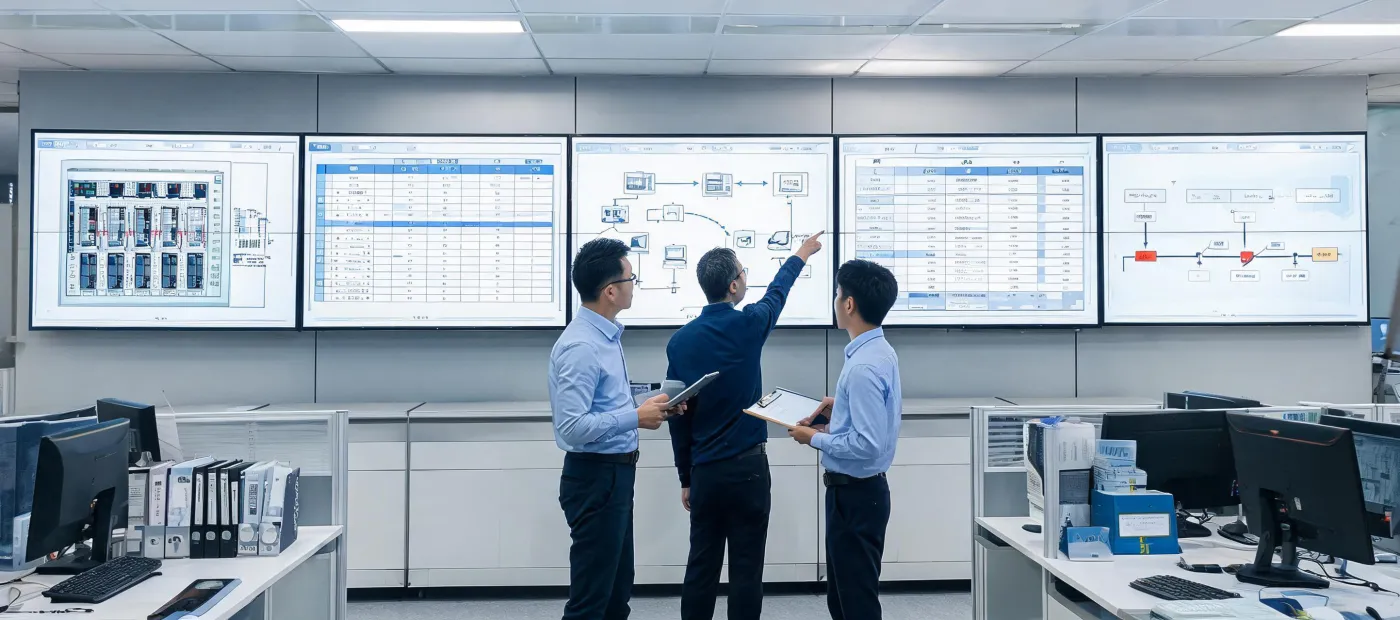
A dashboard status is a workflow indicator, not a product-performance claim. Final suitability depends on exact model data, application validation and qualified commissioning.
Record CPU code, rack order, I/O types, special modules, supply voltage, program backup and current communication peers.
Request the checklistCompare program memory, scan demand, remote I/O, motion axes, protocol support, enclosure limits and required gateways without claiming a drop-in replacement.
Start a comparisonKeep approved module codes, accessories, software or cable needs, quantities, destination and requested timing on the same record.
Prepare a quoteState cycle expectations, downtime constraints, I/O count and whether the work is a new build, capacity extension or legacy migration.
Native protocol support may reduce integration effort, while gateways can preserve existing devices at the cost of another configuration and diagnostic layer. Centralized I/O simplifies cabinet architecture; distributed I/O can reduce field wiring but introduces network dependency.
Applicable manuals, wiring drawings and conformity evidence are tied to exact series and destination. Network compatibility alone does not establish deterministic cycle performance, and program conversion still requires bench and machine validation.
Shipment status, revisions and open accessories remain visible. Batteries, programming cables and terminal blocks are checked separately because they may not be bundled with the CPU or module.
Send the module list, I/O schedule, program version and network drawing. We will identify confirmed inputs, unresolved constraints and the documents required before quotation.
Request Project Support